Project

Flat Skylight Control

Energy-efficient control board that opens and closes flat skylights, with automatic rain and battery protection.

June 2026
STM32 PCB Embedded 433 MHz

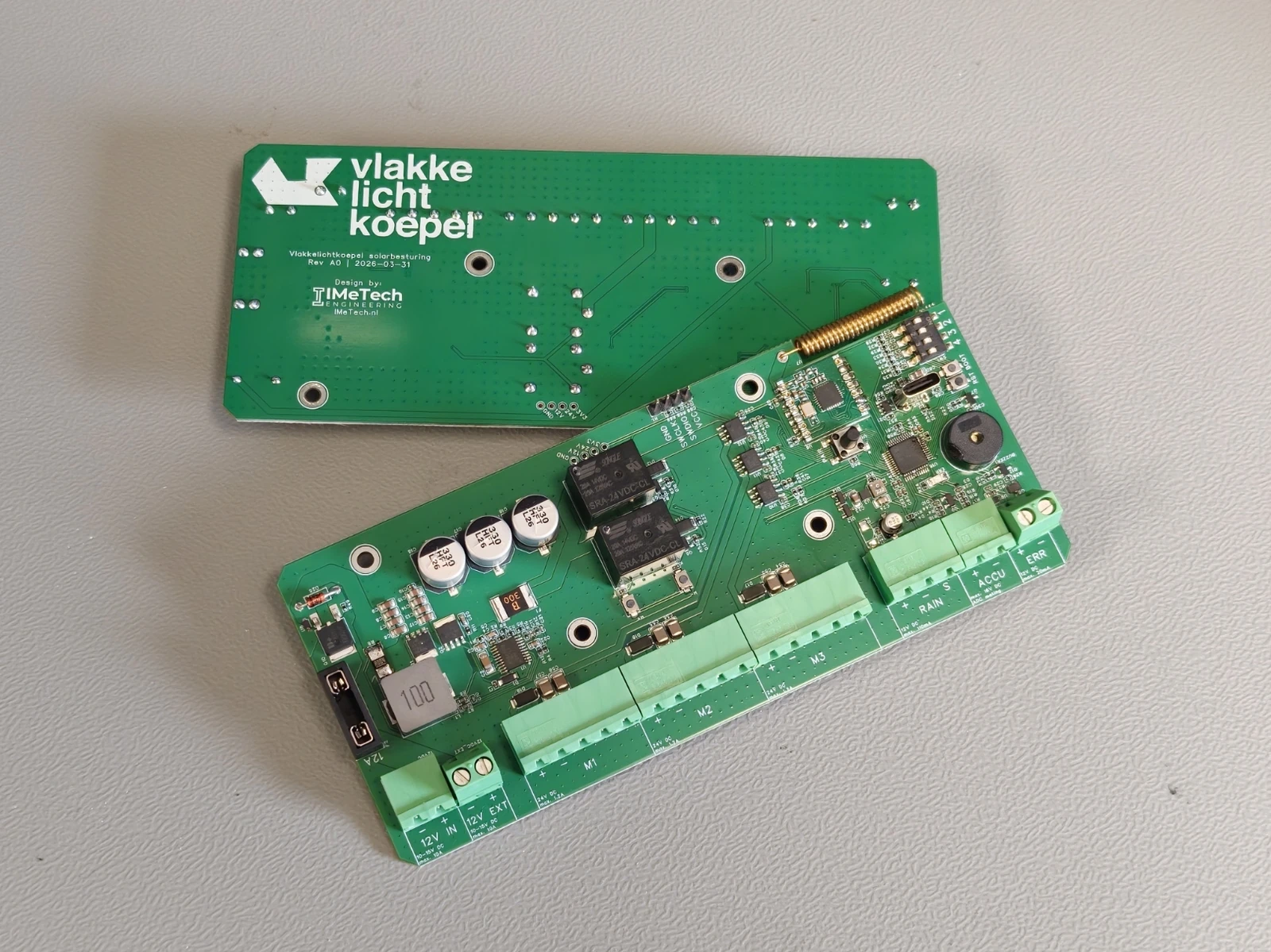
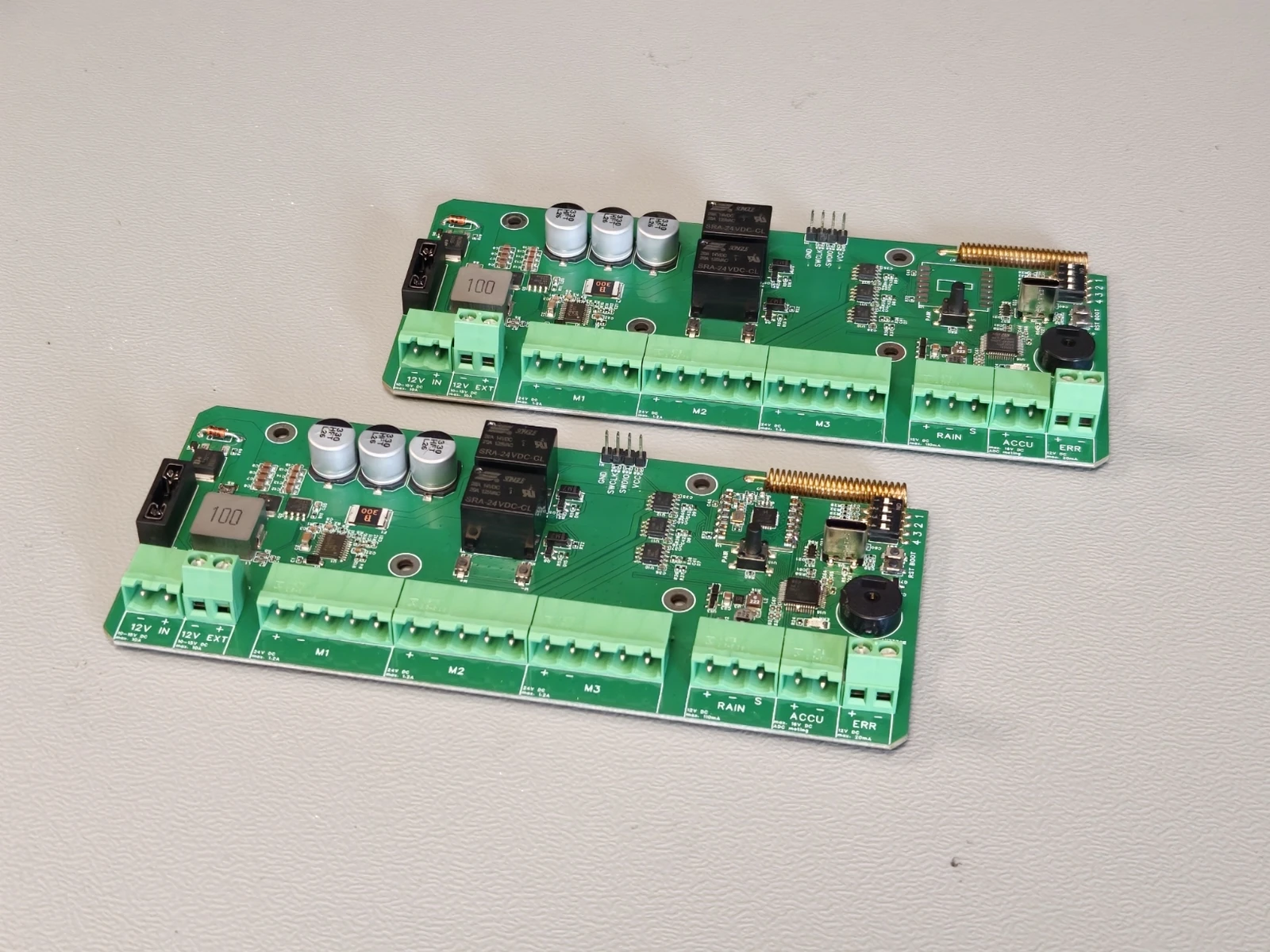
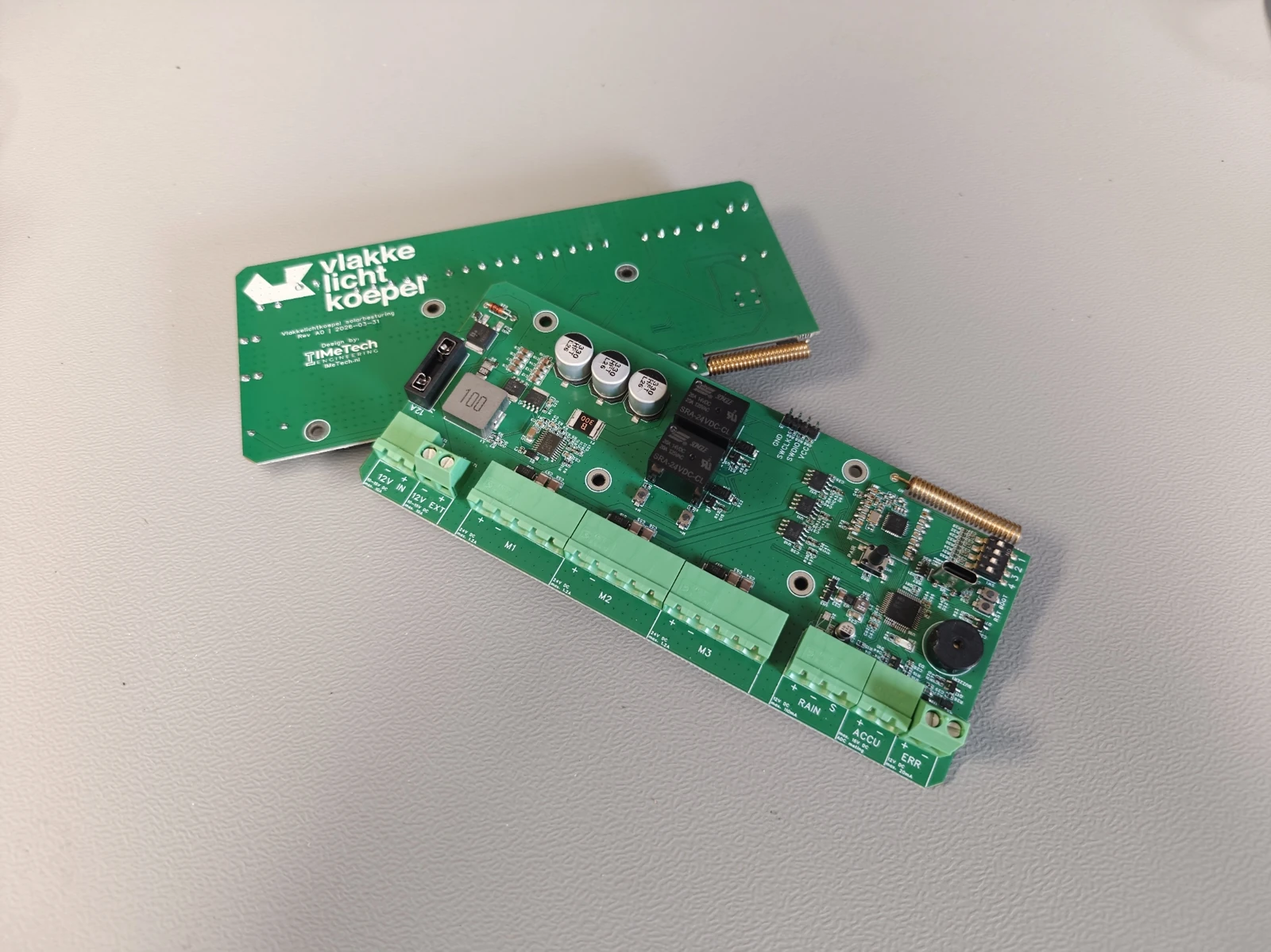
The flat skylight control board was developed as a replacement for an existing controller that consumed too much power for solar applications. The board manages opening and closing flat skylights via the motors and suits both mains-powered and battery-driven installations — with one uniform design for simple assembly and inventory management.

The hardware is built around an STM32 microcontroller with a 12 V input, internal boost to 24 V for the motors and separate low-voltage rails for logic and RF. Up to three motors can be driven in parallel. A rain sensor automatically closes the skylight when it rains, while battery monitoring prevents deep discharge. Per motor channel, a current sensor detects overload, blockages and skew.

Operation is possible via 433 MHz remote control, local panel buttons or fully automatic safety logic. After inactivity the board enters a deep sleep state with low power draw. DIP switches configure the number of motors and the sensitivity of current monitoring. Buzzer and status LED provide immediate feedback during operation and fault conditions.

IMeTech delivered the full trajectory: from specification and PCB design to firmware, production files and handover including datasheet and installation guide. The result is a compact, energy-efficient controller that works reliably in the field and is straightforward to install and maintain.

Who is this for?

Building owners and installers working with flat skylights, especially where solar power or battery operation makes energy use matter, will find this relevant. It's also useful for anyone wanting one uniform solution that works on both mains-powered and battery-driven installations — fewer variants to stock and a simpler installation process, whether for a new build or replacing an older system.

What makes it special?

What stands out is how self-sufficient the board is. It closes the skylight automatically when it rains, keeps an eye on the battery so it doesn't discharge too deeply, and uses a current sensor per motor to catch blockages or misalignment. Operation is possible via remote control, panel buttons or fully automatic logic, and after a period of inactivity the board switches itself into a low-power sleep state — without anyone needing to manage it.

Control systems for skylights or other motor applications?

I design energy-efficient PCBs with embedded firmware for reliable control of motors, sensors and wireless operation.

Get in touch