Project

Self-Balancing Cube

High-performance mechatronic system utilizing conservation of angular momentum for precise orientation control.

March 2023
Mechatronics Control Systems Embedded Design PID Control

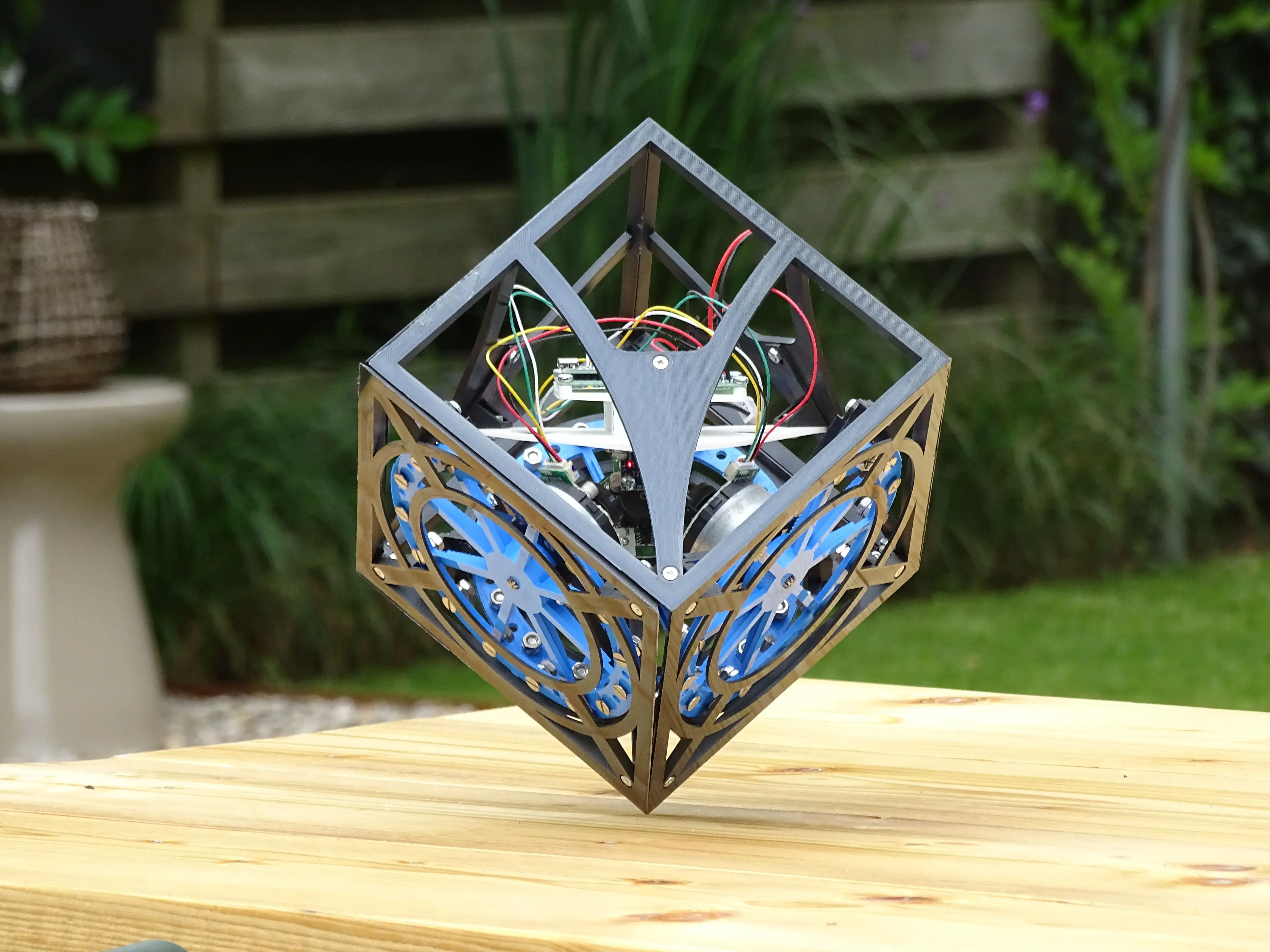
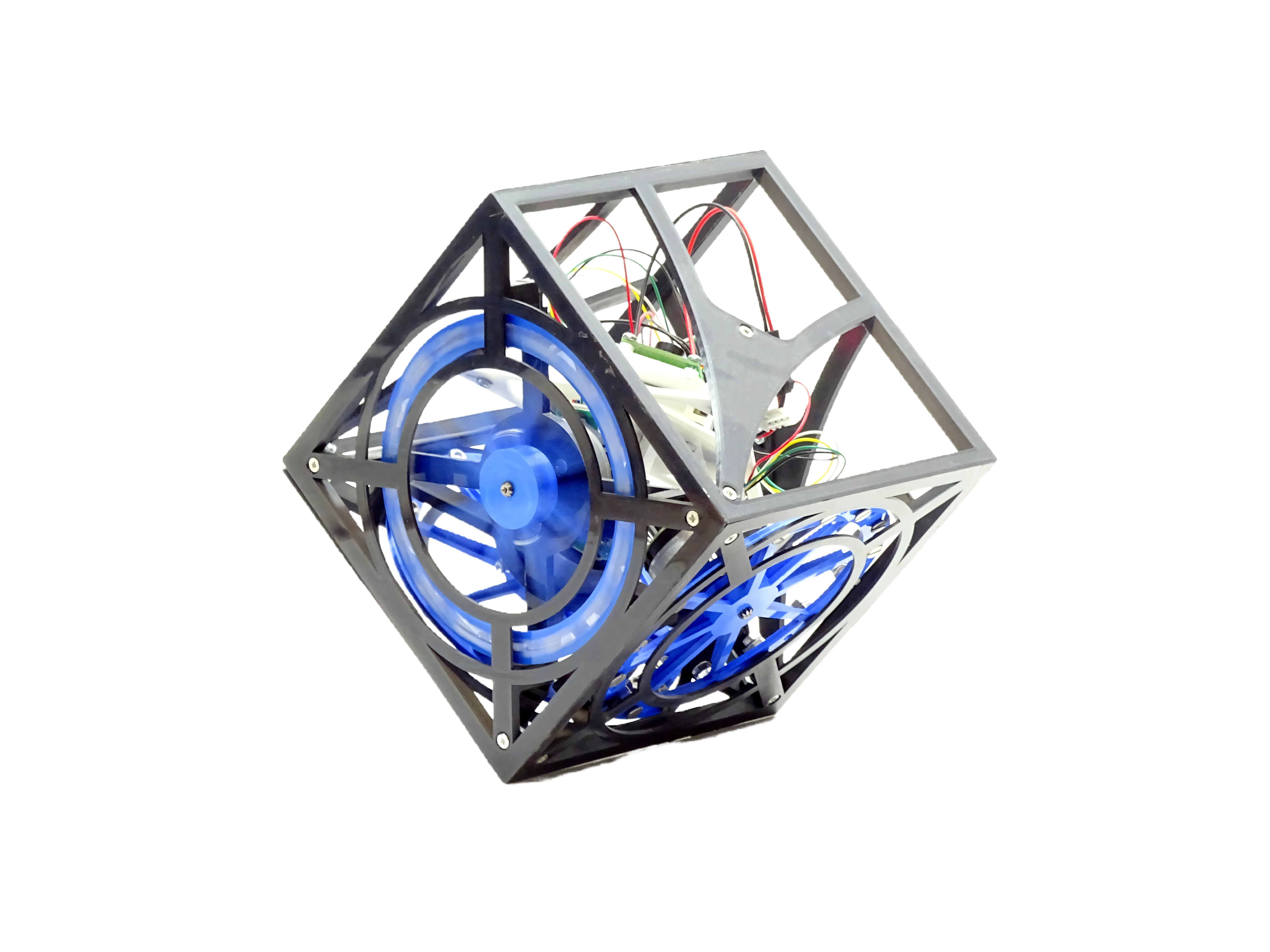
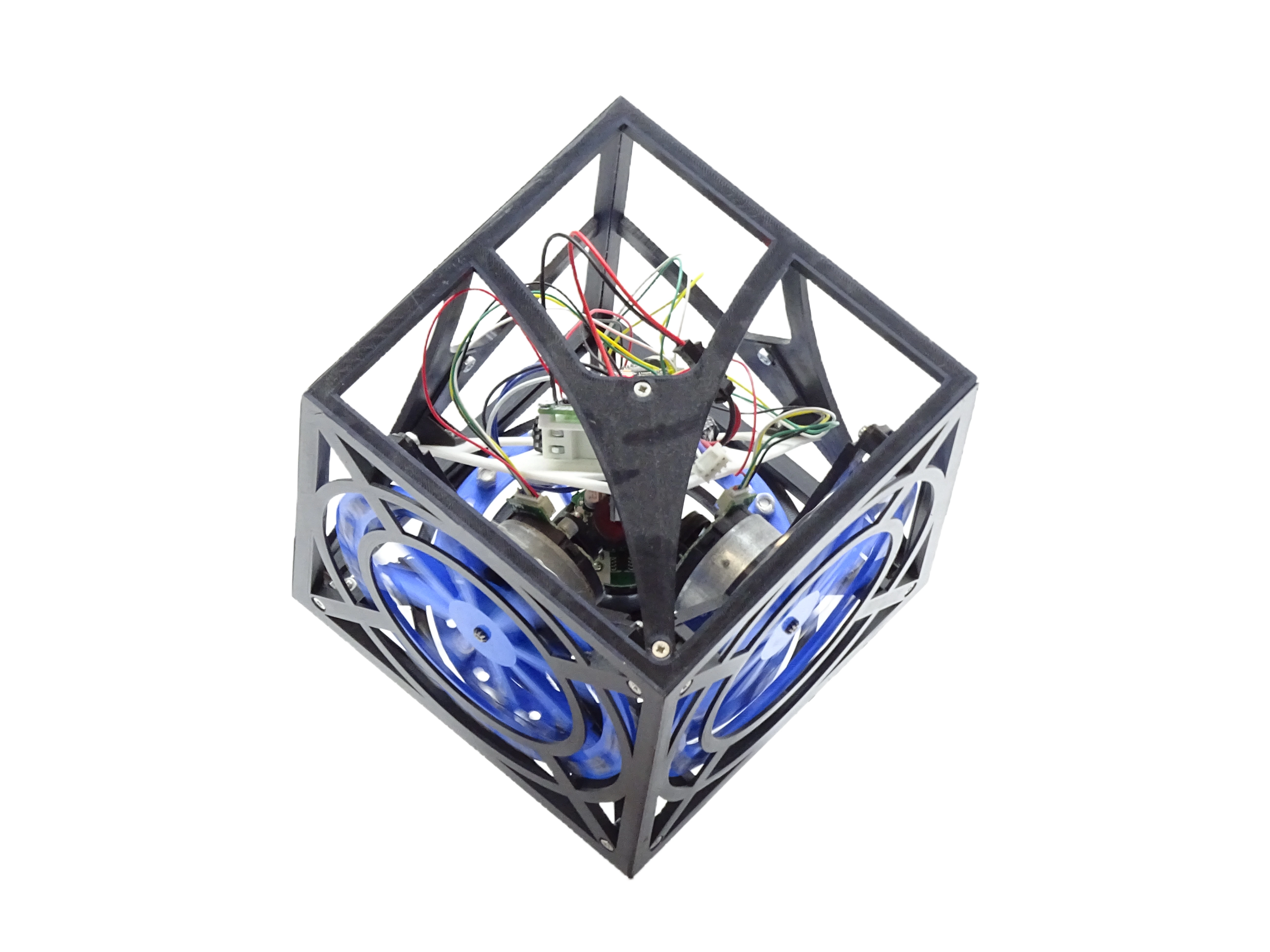
The Self-Balancing Cube is a sophisticated engineering demonstration that maintains its balance on an edge or even a single corner. This is achieved through the use of high-speed reaction wheels (flywheels) that generate corrective torques based on the physical law of conservation of angular momentum.

The mechanical assembly was engineered in SolidWorks with a critical focus on center-of-gravity optimization and structural rigidity to minimize vibration. The control system utilizes custom firmware written in C++, which processes high-speed orientation data from an IMU (Inertial Measurement Unit) to execute precise brushless motor commands via a tuned closed-loop controller.

This project is an advanced showcase of dynamic stabilization, embedded real-time control, and low-level mechatronic integration, proving the ability to handle complex physics-driven hardware challenges.

Who is this for?

This self-balancing cube is a good fit for anyone fascinated by technology that seems to defy intuition, like an object that stays upright on a single corner. It's a great example for students and engineers exploring control theory and stabilization, and for anyone who wants to see how sensors and motors have to work together in real time to keep something in balance. As a demonstration of what physics, electronics, and mechanics can achieve together, this project shows just how far that combination can go.

What makes it special?

What makes this cube special is that it balances on just a single edge or corner, purely through spinning reaction wheels that constantly supply corrective force. An IMU measures orientation at high speed, and the custom controller responds with motor commands just as fast, so the cube is continuously correcting itself in ways too quick to see. The mechanical design deliberately favors a low center of gravity and a rigid frame, so vibration doesn't disturb the precise balance. The result is a demonstration where physics, electronics, and software are fully in sync.

Mechatronic challenges?

From dynamic stabilization to high-speed motion control, I build systems that master physical forces.

Get in touch